The Bailey Lab just got back from Chicago for this year’s Pittcon. All while presenting their work at the McCormick Place, they found time to venture downtown and to the Museum of Science and Industry for the Pittcon Party.

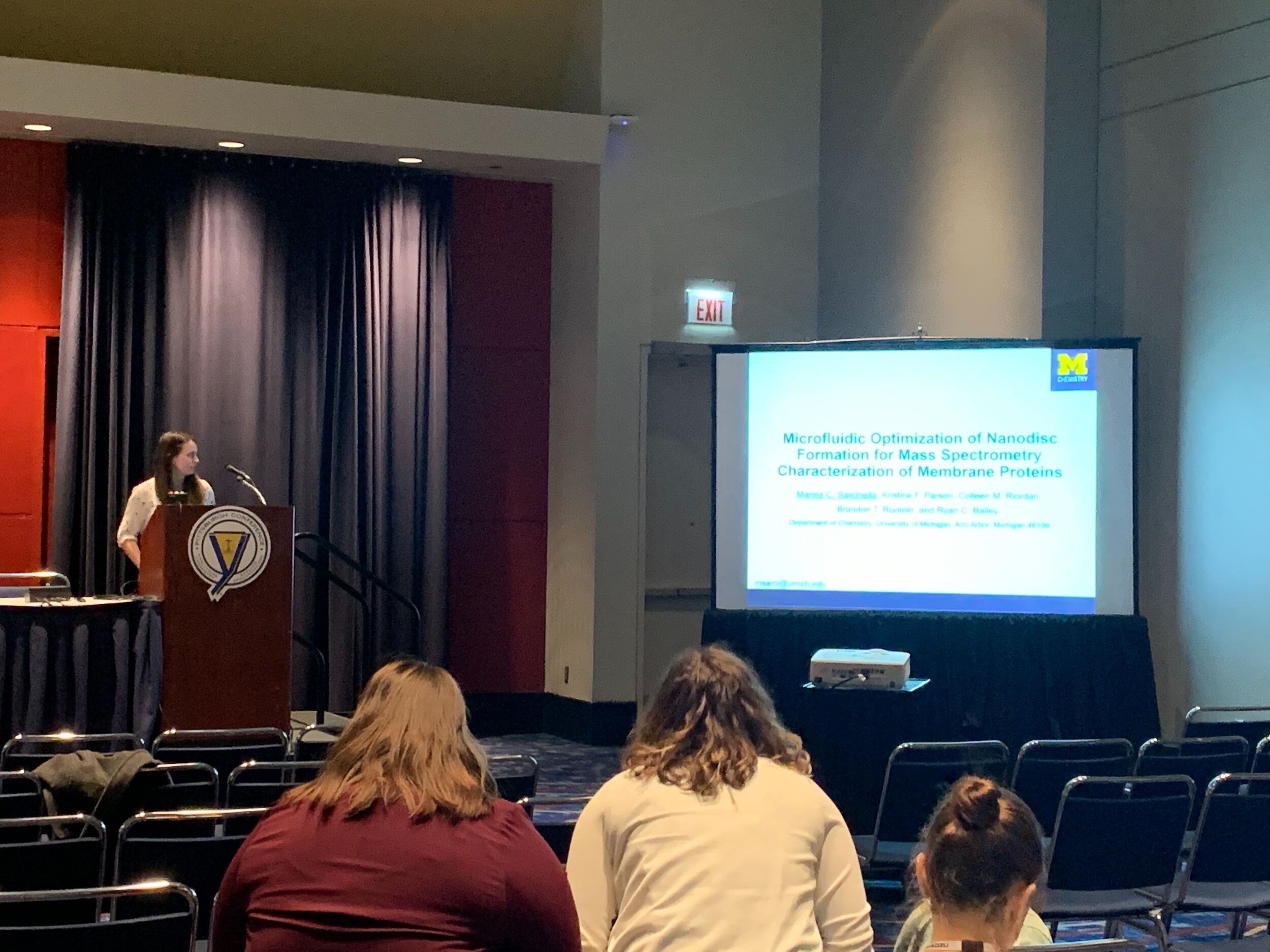
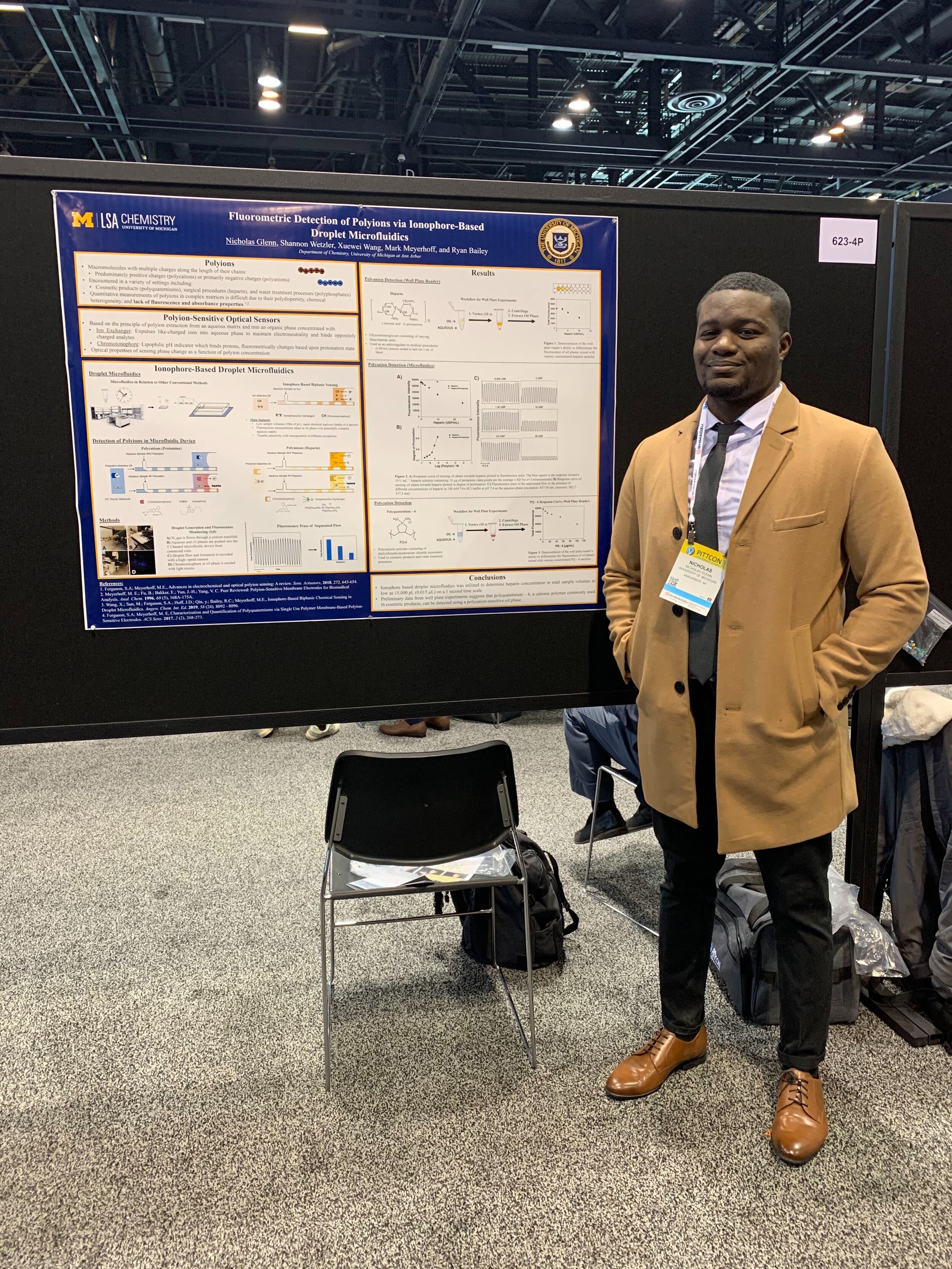



The Bailey Lab just got back from Chicago for this year’s Pittcon. All while presenting their work at the McCormick Place, they found time to venture downtown and to the Museum of Science and Industry for the Pittcon Party.
https://twitter.com/hashtag/VICITeddy?src=hash

Here’s a snippet from the article:
All the main detection techniques commonly used with capillary electrophoresis (CE) can only detect analytes with specific properties. Fluorescence detectors can only detect analytes that fluoresce, UV detectors can only detect analytes that absorb UV light and amperometric detectors can only detect analytes that can be oxidized or reduced at an electrode. Even mass spectrometry, which is generally considered a universal detection technique, can only detect analytes separated by CE that can be efficiently converted into ions by electrospray ionization.
The one detection technique that can work with CE and is truly universal is refractive index (RI) detection, in which analytes are detected by changes they cause in the extent to which light is bent, or refracted, as it passes through the CE buffer. The problem is that RI detection isn’t particularly sensitive, especially at the small scales of CE.

Electrophoretic separations conventionally rely on chromogenic, fluorogenic, or redox properties for analyte detection that, in many instances, involve chemical modification of samples prior to analysis. For analytes natively lacking chemical signatures, refractive index-based measurements are appealing as a method to detect these molecules without pre-treatment. Microring resonators are a type of whispering gallery mode sensor capable of detecting bulk changes in refractive index. Here, we demonstrate the use of silicon photonic microring resonator arrays as a post-column detector for capillary electrophoresis. In this approach, we establish the universal detection capabilities of microrings through calibration with analytes lacking unique spectral signatures. Separations of small molecule mixtures are demonstrated using capillary zone electrophoresis. For these separations, the microring resonators maintain a linear response over several orders of magnitude in concentration for three candidate small molecules. Successful separation of three sugars with direct detection is also demonstrated. We further present the successful separation and detection of three model proteins, exemplifying the promise of microring resonators arrays as a biocompatible detector for capillary electrophoresis. Additionally, the spatially offset, array-based nature of the sensing platform enables real-time analysis of analyte mobility and performance characterization—a combination that is not typically provided using single-point detectors.

ABSTRACT
Progress in the development of biosensors has dramatically improved analytical techniques. Biosensors have advantages over more conventional analytical techniques arising from attributes such as straightforward analyses, higher throughput, miniaturization, smaller sample input, and lower cost. Microring optical resonators have emerged in the area of optical sensors as an exceptional choice because of their sensitivity, ease of fabrication, multiplexity capability, and label-free detection. In this article, the sensing principle of these sensors is described. In addition, we summarize and highlight their most recent and relevant applications in environmental and clinical detection analysis.

Colleen Riordan was recently awarded a Tony B. Academic Travel Award in order to attend SLAS 2020. Be sure to check out her recent work on “Microfluidic Platform for Optimizing the Formation of Nanodisc Libraries from Whole Cell Lysate to Enable Activity-Based Profiling.”
Congrats, Colleen, and good luck!

Professor Ryan Bailey was featured by the Analytical Scientist among scientists “showcasing the tremendous range of talent, ingenuity and leadership present across all corners of analytical science on a global scale.” You can read up on Ryan’s philosophy of smaller, faster and cheaper, and check out who else was featured here!

This year, members of the Bailey Lab presented their work at the Karle Symposium and won awards for their hard work. Emily Mordan received second place among graduate student presenters for her talk, “Linear Gradient Compatible Refractive Index Based Detector for Polymer Composition Characterization.” Colleen, Cole, and Shannon all earned awards for their poster presentations, too!
Way to go, everyone! You can stay posted on future publications by following us here!
Members of the Bailey group just wrapped up presenting at UM’s Microfluidics in Biomedical Sciences Training Program Symposium. Among all of the thought-provoking presentations, Colleen Riordan was able to take home a best poster award for her presentation on a "Microfluidic Platform for Optimizing the Formation of Nanodisc Libraries from Whole Cell Lysate“. Steve Doonan walked away with an award for his talk titled “Development of the Droplet CAR-Wash Platform for Picoliter-Scale Epigenetic Analysis“.
The Bailey lab greatly appreciates the opportunity to share their work and learn from campus colleagues. For those interested in learning about microfluidics and seeing what MBSTP has to offer, you can follow this link http://umich.edu/~ufluids/ to find out more. See you next year!

Dr. Steve recently defended his thesis titled “Microfluidic Technologies for Bioanalytical Chemistry: Advancing Epigenetic Profiling via Chromatin Immunoprecipitation in Droplets."
Congrats, Steve, and good luck on the road ahead!


Dr. Mari recently defended her thesis titled “Development of the Silicon Photonic Microring Resonator Platform with Applications for the Detection of Nucleic Acids and Other Biopolymers."
Next up, she will be starting a post-doc at the Catalan Institute of Nanoscience and Nanotechnology. Congrats Mari!


