

This past week, Nico (the Bailey Lab’s 5th-year mechanical engineering graduate student) presented his work at the 25th International Conference on Miniaturized Systems for Chemistry and Life Sciences (microTAS 2021) in Palm Springs, California. The microTAS conferences are a platform for scientists to report recent advances in microfluidics, microfabrication, nanotechnology, and detection technologies, among other topics, in life science and chemistry. Nico was able to hear cutting-edge research talks, network with other scientists, and present his work: “A droplet-based phase grating for refractometry and viscometry” in the “Sensors and Detection Technologies” poster session. The return to in-person conferences also allowed Nico to explore a new area, something which we have all enjoyed viewing through his many photos of the desert landscape!

Check out the latest Bailey Lab publication by Dr. Heather Robison and Dr. Cole Chapman in Scientific Reports!
Risk assessment of latent tuberculosis infection through a multiplexed cytokine biosensor assay and machine learning feature selection

Abstract
Accurate detection and risk stratification of latent tuberculosis infection (LTBI) remains a major clinical and public health problem. We hypothesize that multiparameter strategies that probe immune responses to Mycobacterium tuberculosis can provide new diagnostic insights into not only the status of LTBI infection, but also the risk of reactivation. After the initial proof-of-concept study, we developed a 13-plex immunoassay panel to profile cytokine release from peripheral blood mononuclear cells stimulated separately with Mtb-relevant and non-specific antigens to identify putative biomarker signatures. We sequentially enrolled 65 subjects with various risk of TB exposure, including 32 subjects with diagnosis of LTBI. Random Forest feature selection and statistical data reduction methods were applied to determine cytokine levels across different normalized stimulation conditions. Receiver Operator Characteristic (ROC) analysis for full and reduced feature sets revealed differences in biomarkers signatures for LTBI status and reactivation risk designations. The reduced set for increased risk included IP-10, IL-2, IFN-γ, TNF-α, IL-15, IL-17, CCL3, and CCL8 under varying normalized stimulation conditions. ROC curves determined predictive accuracies of > 80% for both LTBI diagnosis and increased risk designations. Our study findings suggest that a multiparameter diagnostic approach to detect normalized cytokine biomarker signatures might improve risk stratification in LTBI.
Read the full paper here!
Congratulations to our alumni, Heather and Cole, and our collaborators, on the hard work and combined efforts that culminated in this publication!
2021 Karle Symposium Recap
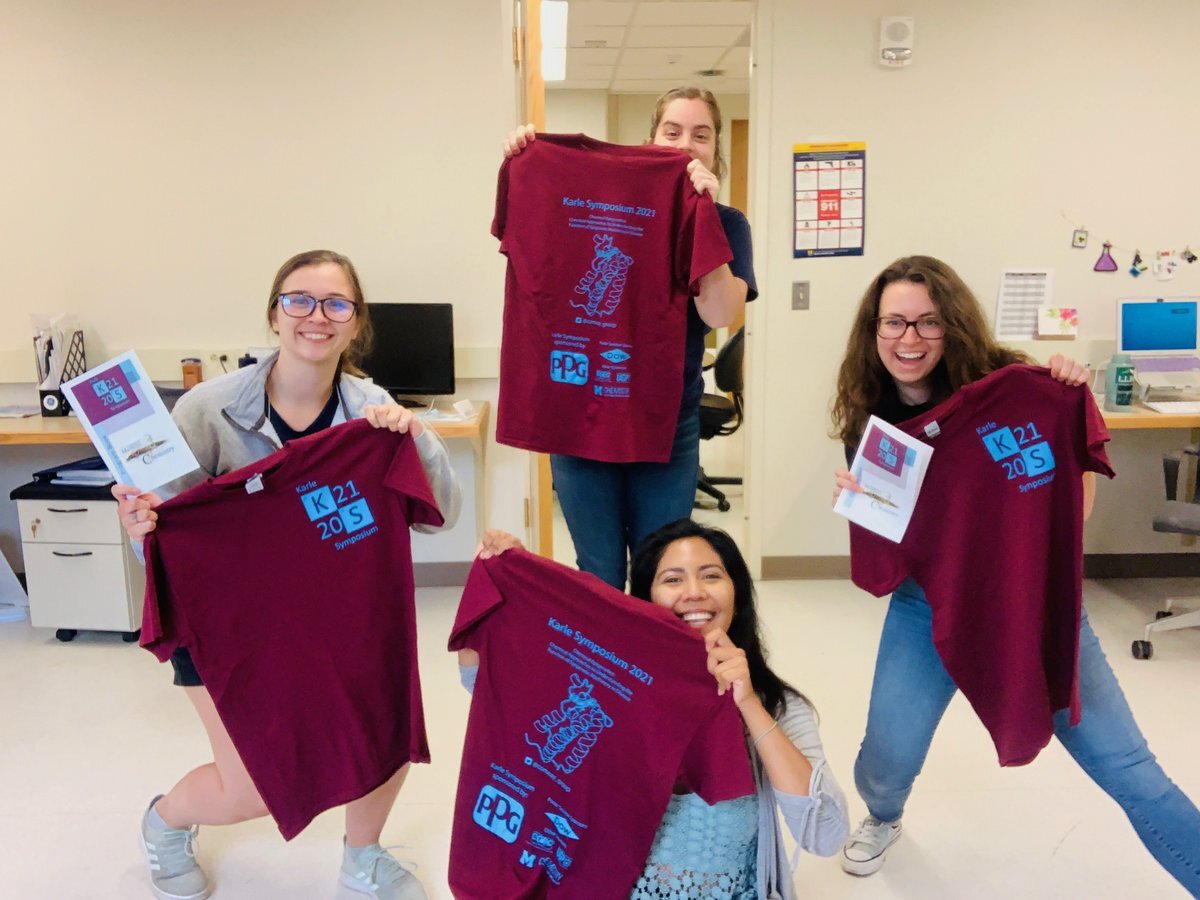
Krista, Claire, Gloria and Marina showing off the 2021 Karle symposium t-shirts!
The 2021 Karle Symposium was held virtually on July 30th. The Karle symposium is a yearly event named for Isabella and Jerome Karle, distinguished graduates of our department, who worked together to advance X-ray crystallography methods. The day was filled with student talks, poster sessions, a PPG plenary lecture, and a keynote lecture. This year’s keynote speaker was Dr. Stuart Conway from Oxford University who presented: “Chemical Epigenetics: Chemical Approaches to Understanding the Function of Epigenetic Machinery in Disease”. This annual symposium is a great opportunity to hear about the ongoing research within the chemistry department.
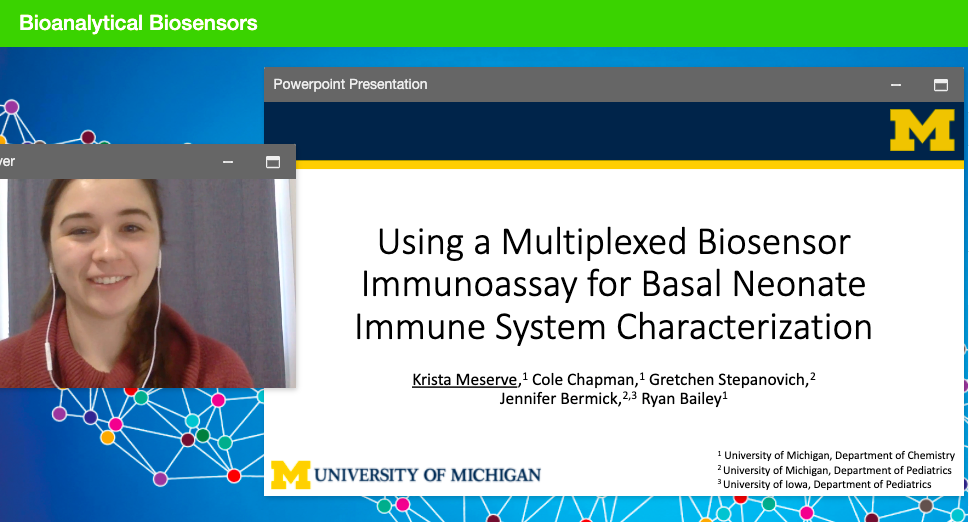
The Bailey lab was represented in the analytical poster sessions by rising fourth year, Marina Sarcinella, and rising third year, Krista Meserve. Marina presented: “Characterization of Multi-Lipid Nanodisc Composition by LC-MS/MS”, while Krista presented: “Using a multiplexed biosensor immunoassay for basal neonate immune system characterization”. Both Marina and Krista received poster presentation travel awards for their work. Congrats!
In addition, the Bailey Lab was represented in the Karle organizing committee. Rising fifth year, Gloria Diaz, served as a co-chair of the symposium and Marina was a part of the organizing team. Congratulations to Gloria for chairing a successful event!
Publication Alert! Check out Shannon's recent paper in Analyst!
Characterization of the Impact of Mixing and Droplet Volumes on the Behavior of Microfluidic Ion-Selective Droptodes

Abstract
Droplet microfluidic optodes, or “droptodes”, have emerged as a powerful technology for rapid detection of small ions in complex matrices. While using segmented aqueous phases provides the benefits of sample isolation, the influence of the liquid nature of the oil carrier phase has not yet been explored. In this paper, we examine the influence of microfluidic parameters on droptode efficiency, using potassium-sensitive droptodes as a model system. We found that while changing flow rates on device does not change droptode performance, both channel geometry and droplet size significantly impact droptode efficiency. Specifically, enhanced mixing of the droplets leads to faster equilibration on device and lowers limits of detection by about one order of magnitude. We also found that increasing the size of the sample droplet, at the expense of the size of the oil carrier/sensing phase, leads to higher sensitivity in the linear region of the droptode. These easily manipulated properties will allow one device to potentially be adapted for several different applications, based upon the type and concentration range of measurement required.
Congrats to Dr. Shannon!
Congrats to Dr. Colleen Riordan!
On Monday, Colleen successfully defended her thesis titled “Developing Microfluidic Devices for the Optimization of Nanodiscs to Measure Membrane Protein Structure and Function."
In the coming weeks, Dr. Riordan will begin working at GlaxoSmithKline as an Investigator.
Congratulations and best wishes to Colleen from all of us in the Bailey Lab!!

Congratulations to Dr. Shannon Quevedo!
Shannon successfully defended her thesis titled “Organic Phases in Microfluidic Systems: Enabling Real-Time Sensing of Small Molecules."
Dr. Quevedo will soon become Major Quevedo as she begins her tenure track faculty position at Virginia Military Institute this fall.
Congrats and best wishes to Shannon from all of us in the Bailey Lab!!

Congratulations to Dr. John Orlet!
The zoom defenses continue! Today, John defended his thesis titled “New Interfaces to Silicon Photonic Microring Resonator Arrays for Chemical Separations."
Dr. Orlet will be starting the next phase of his career in a Scientist position at Bristol Myers Squibb.
Best wishes to John from all of us in the Bailey Lab!!

The Bailey Lab Presents at Pittcon 2021
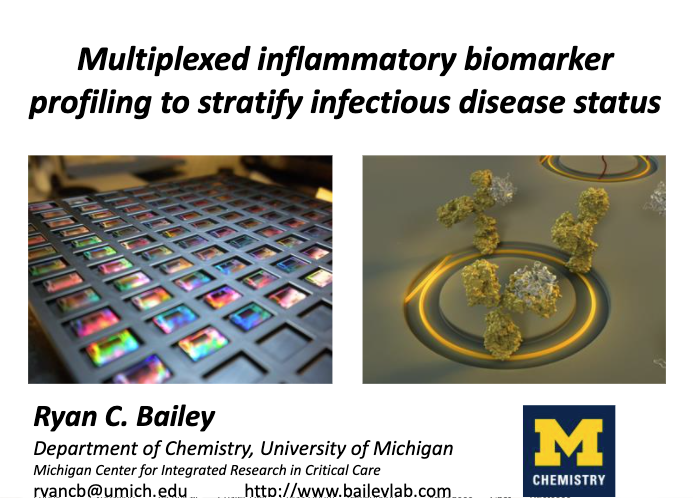
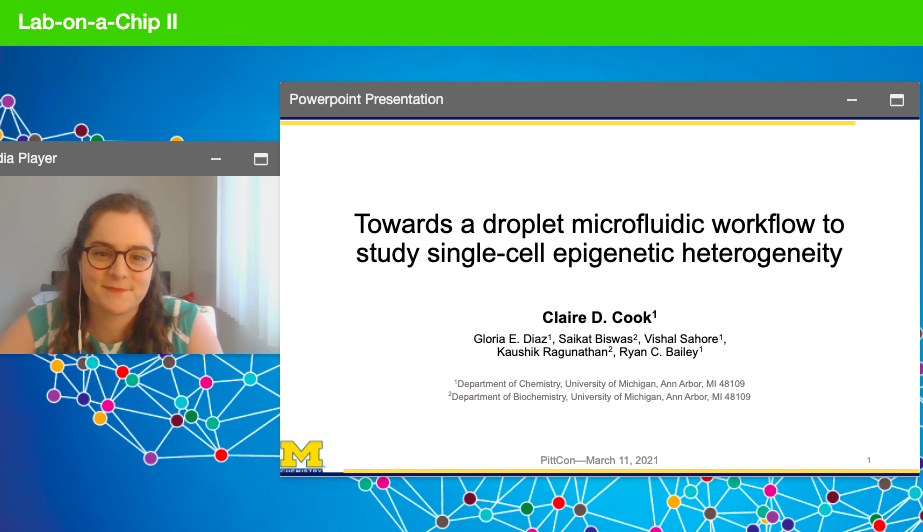
Current students Nick (3rd year), Claire (3rd year) and Krista (2nd year), along with Professor Bailey, virtually presented their work at Pittcon’s 2021 meeting. While the sights, sounds and tastes of NOLA were surely missed, there was no shortage of oral presentations, poster sessions, and fun excursions (via zoom) to fill up the week.

Congratulations to Dr. Cole Chapman!
This week, in a virtual format, Cole defended his thesis titled “Clinical Diagnostics for Immune Response Assessment Through Multiplexed Biosensor Immunoassays In At-Risk Populations."
In March, Cole will continue his work with photonic-based diagnostics as a research scientist at SiPhox in Burlington, Massachusetts .
Congratulations to Dr. Chapman from all of us in the Bailey Lab!!

Congratulations to Dr. Sara Medfisch!
On Friday, Sara defended her thesis titled “Optimization of Nanodisc Array Generation on Silicon Photonic Microring Resonators for Lipid-Protein and Membrane Protein-Protein Interaction Characterization."
Next month, Sara will begin her career as a scientist at NGM Biopharmaceuticals in San Francisco, California.
Congratulations to Dr. Medfisch from all of us in the Bailey Lab!

